Athens Radio Club
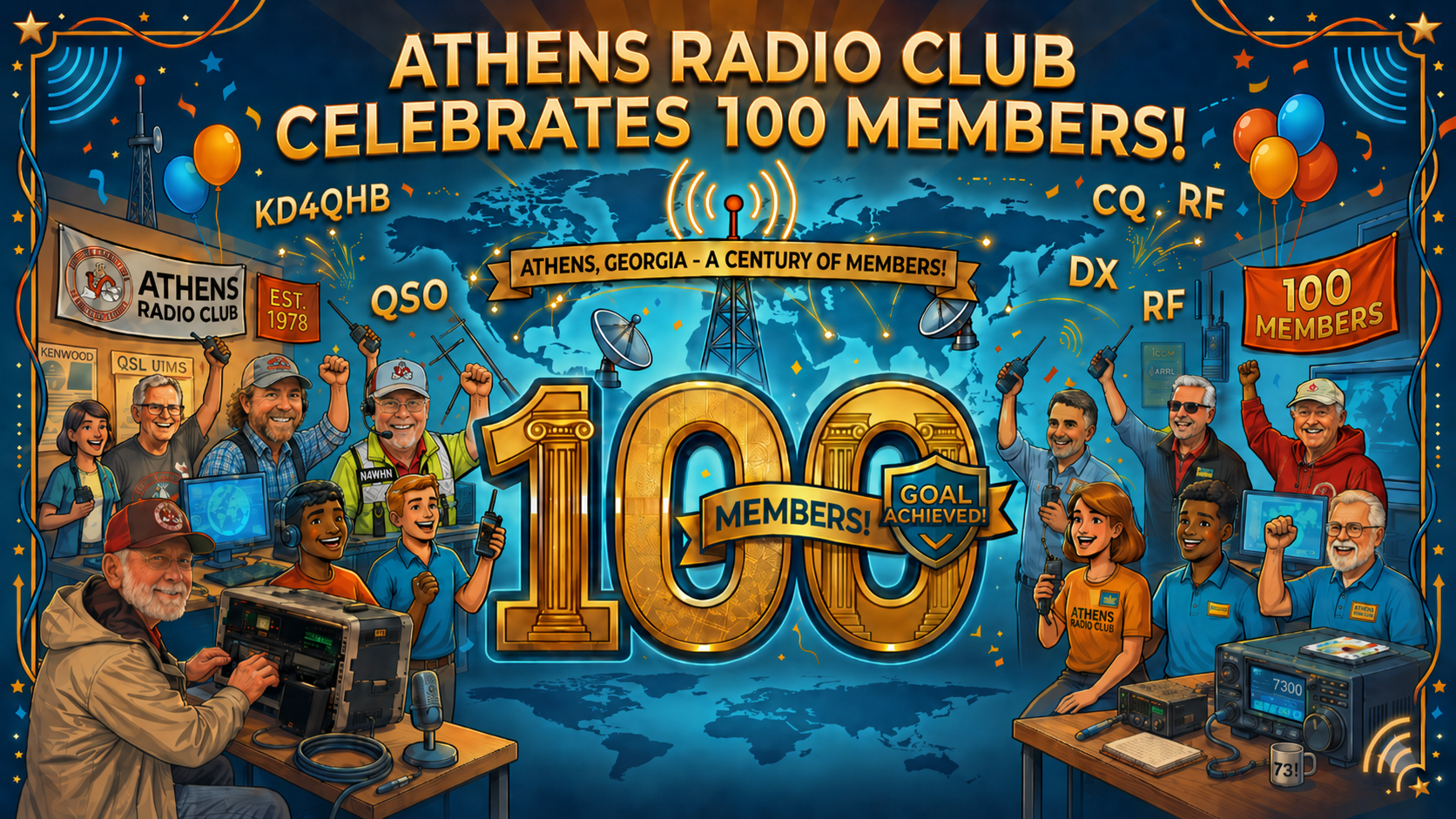
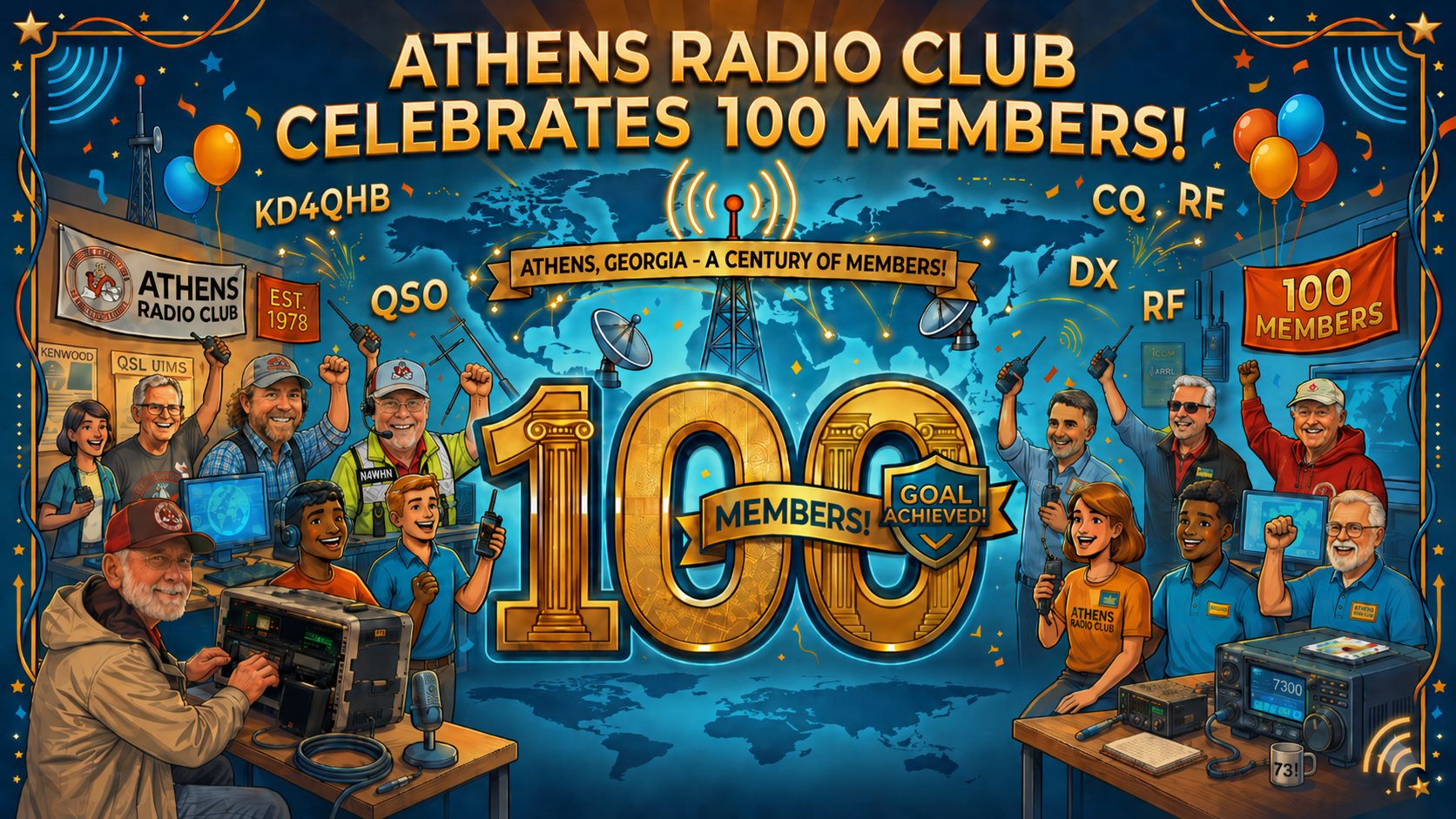
The Athens Radio Club is active in the amateur radio hobby. The club hosts several annual events that provide opportunities for operators to experience all aspects of amateur radio. Our members can be found operating POTA, working a variety of public service events, or just ragchewing on the local repeater. Join us at a regular meeting, at one of our many events, or on the air. Membership is not required but is encouraged and appreciated. We have set a goal of 100 members for 2026.
Upcoming Meetings, Programs, and Events
August 22-23 - Huntsville Hamfest.
September 1- 7:30 Athens Radio Club Meeting.
The program will be “Fox Hunting” by Richard (KR4OS).
September 4-5 - Shelby Hamfest
September 5 - ARC will provide communications for the First Aid Dawgs at the UGA home football game, UGA vs. Tennessee State Tigers. Kick-off is scheduled for 3:00. For information, or if you would like to help, contact Bob (KE4JLL). You must be credentialed in advance to work these events.
September 12 - ARC will provide communications for the First Aid Dawgs at the UGA home football game, UGA vs. Western Kentucky Hilltoppers. Kick-off is scheduled for 12:45. For information, or if you would like to help, contact Bob (KE4JLL). You must be credentialed in advance to work these events.
September 26 - ARC will provide communications for the First Aid Dawgs at the UGA home football game, UGA vs. Oklahoma Sooners. Kick-off is scheduled for TBD. For information, or if you would like to help, contact Bob (KE4JLL). You must be credentialed in advance to work these events.
October 3 - ARC will provide communications for the First Aid Dawgs at the UGA home football game, UGA vs. Vanderbilt Commodores. Kick-off is scheduled for TBD. For information, or if you would like to help, contact Bob (KE4JLL). You must be credentialed in advance to work these events.
October 6 - 6:00 Amateur Radio License Exams.
October 6 - 7:30 Athens Radio Club Meeting.
The program will be “ARES” by Phillip (W4PHC).
October 17 - ARC will provide communications for the First Aid Dawgs at the UGA home football game, UGA vs. Auburn Tigers. Kick-off is scheduled for TBD. For information, or if you would like to help, contact Bob (KE4JLL). You must be credentialed in advance to work these events.
October 17 - 10 am to 2pm - Georgia POTA Sprint - club participation/location TBD.
October 31 - 9 am to 3 pm - Wicked Four Halloween at Hard Labor Creek State Park.
November 3 - 7:30 Athens Radio Club Meeting.
The progam will be “DX Contesting by Scott (KW4NJA).
November 14 - ARC will provide communications for the First Aid Dawgs at the UGA home football game, UGA vs. Missouri Tigers. Kick-off is scheduled for TBD. For information, or if you would like to help, contact Bob (KE4JLL). You must be credentialed in advance to work these events.
November 28 - ARC will provide communications for the First Aid Dawgs at the UGA home football game, UGA vs. Georgia Tech Yellow Jackets. Kick-off is scheduled for TBD. For information, or if you would like to help, contact Bob (KE4JLL). You must be credentialed in advance to work these events.
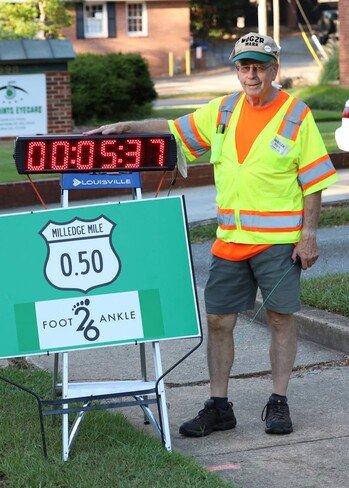
March 27 - Classic City Marathon.
See the main ARC Calendar Page for more events.
See the ARC Past Events page to see what we have been doing.
Someone in Athens is stealing the wheels off ACCPD police cars. The police are working tirelessly to catch him.
Meteor Scatter and MSK144
Usher, NN4EE, sent out an email about the Perseids Meteor Shower, which is included below. In it, he mentioned using the ionized trails left behind by meteors to bounce 6-meter signals and communicate using MSK144. Since I already have WSJT-X installed for FT8 and my dipole antenna will tune on 6 meters, I thought I would give it a try. Although I still have not made a contact this way, I have seen some other stations on the air. I remain hopeful.
[AthensRadioClub] Perseids Meteor Shower Peaks This Week
A great time to try out MSK144 Mode on 6 meters to bounce your HF signals off meteor trails!
How to use MSK144 and when to watch below.
MSK144
MSK 144 is used for Meteor Scatter operation, where you bounce your signals off the ionised trails left by meteors. Usually on 10m, 6m, 4m and 2m. These reflections are called "pings", and don't last long long (on 6m, around 2 seconds). MSK144 (like its predecessor FSK144) transmits your message continuously in a loop for a while, and you hope a well-placed meteor will allow somebody to receive your signal. Before these digital MS modes, operators used very fast morse code, played from tapes. They would receive and record to tape, and playback the recording slowly to decode by ear. If you have FT8 setup you can use MSK144 as it is a part of the WSJT-X program.
When to watch:
The peak is predicted** for 14:53 UTC on August 13, 2026. So the mornings of August 12 and 13 are probably your best bets. But August 11 and August 14 might be good as well. Watch your weather! And be aware that the Perseids tend to rise to a peak gradually, then fall off rapidly after their peak.
When to watch: Watch in the hours before dawn. Do not watch in early evening; the radiant won’t have risen yet. The radiant – in the constellation Perseus – rises in late evening and is highest at dawn, as seen from the Northern Hemisphere. That’s why the meteors are best before dawn.
Southern Hemisphere: For many populated areas in the Southern Hemisphere, the radiant doesn’t rise above the horizon. Unless you live at a latitude closer to Earth’s equator than about 30 degrees S., the Perseids probably aren’t a major shower for you. But you can still see Delta Aquariid meteors flying in a dark sky!
Nearest moon phase: The new moon falls at 17:37 UTC on August 12. So the peak mornings for the Perseids will be moon-free. Plus! Those lucky enough to be observing the August 12 total solar eclipse might catch a Perseid during totality. That would be crazily wonderful!
Duration of shower: July 14 to September 1. This time period is when we’re passing through the meteor stream in space. But, remember, the meteors tend to fall off rapidly after the peak mornings.
Expected meteors at peak, under ideal conditions: Under a dark sky with no moon, skywatchers frequently report 90 meteors per hour, or more. The August Perseid meteor shower is rich and steady. The meteors are colorful, and many are bright. And they frequently leave persistent trains. All of these factors make the Perseid shower the most beloved meteor shower for the Northern Hemisphere.
Enjoy,
Usher NN4EE
My Experience So Far
Getting started was as easy as clicking Mode on the menu at the top of the WSJT-X screen, selecting MSK144, and switching to 6 meters. I immediately started receiving some signals.
Some questions immediatly came to mind. So I resorted to AI for the answers. I will share them here.
How long his the transmit receive window in WSJT-X? The standard MSK144 transmit/receive period is 15 seconds. Your station transmits for 15 seconds and then listens for 15 seconds. This is similar to the 15-second timing cycle used by FT8. To to the longer cycle, heat could be an issue for your transmitter. Be sure to adjust your transmitter power level to account for the heat that may be generated during transmission.
How long will the ionized trail from the meteor last? It varies considerably. A usable meteor reflection may last only a fraction of a second, while stronger ones can last several seconds or even longer. MSK144 is designed to make use of extremely short reflections, or “pings.”
If the window is only 3 seconds long and you are transmitting for 15 seconds, how do you get a reply before the window closes? You don’t. MSK144 repeatedly sends the same message throughout your transmit period. A brief meteor reflection may allow the other station to decode that message, but by the time it is the other station’s turn to transmit, that particular trail will usually be gone.
How do you get a reply? You keep your fingers crossed and hope another meteor leaves an ionized trail in exactly the right place so that you can communicate again. You and the other station continue alternating transmissions until the necessary messages get through. This can take many minutes, particularly when meteor activity is low.
If you see someone calling CQ, can you just click on them and let WSJT-X work its magic, just like FT-8? Yes. Double-click the station calling CQ, and WSJT-X will set up the response and use the opposite transmit interval.
If one wants to call CQ, are there any rules one should follow? Yes. As a general rule, the wertern most station transmits during the first, or even, sequence. In North American MSK144 operation, the general convention is Point East, Transmit Even (PETE). If you are calling toward the east, transmit during the first, or even, sequence. If you are calling toward the west, transmit during the second, or odd, sequence. In WSJT-X, check the box labeled Tx even/1st to transmit during the even sequence and uncheck it to transmit during the odd sequence. Current MSK144 operating guidance describes this as east = first/even and west = second/odd.
If you are responding to someone else’s CQ, just double-click on the station and WSJT-X will take care of the timing.
In practice, if most of the signals you are seeing are transmitting during the even time slots, you would generally want to call CQ during the odd time slots so those stations are listening when you transmit.
Additionally, if there is another meteor-scatter station close to you, you do not want to be transmitting while that station is trying to receive. Ideally, nearby stations should use the same transmit interval so that they transmit and receive at the same time. By “close,” I mean close enough that your transmitted signal could hear you directly and interfere with the other station’s ability to hear weak meteor-scatter signals.
Why is the Fast Graph screen not showing any useful information? You should click the Auto Level button near the bottom of the screen to adjust the levels.
Why do I seem to be transmitting for 30 seconds when everyone else seems to be transmitting for only 15 seconds? In my version of WSJT-X, v3.1.0 improved PLUS, it defaulted to 30 seconds. The correct interval for the US on 6 meters is 15 seconds. I needed o change the T/R 30 x to T/R 15 s, near the middle of the screen.
I am seeing signals on the fast graph that last for nearly the entire 15 second receive interval. Are those Meteor Scatter signals? Probably not. You are probably receiving those signals by some other means. Contacts via Meteor trails are usually somewhere between 0.1 and a few seconds.
What distances should I expect from my Meteor Scatter contacts? 300–1,500 km (175–925 miles) is a good estimate. Contacts closer than 150 miles are probably not Meteor Scatter.
Do I need to identify my station after transmitting? No, your call sign is transmitted as part of the digital message so you normally do not need a separate voice or CW identification. Note: If you use the Sh option, MSK144 sends a Short Hashed version of your call sign, not your actual callsign. This puts you into a legally grey area of identification. Best practice is to keep Sh unchecked as it provides no significant advantage on 6 meters.
When is the best time to do Meteor Scatter? Generally, 4:00 to 8:00 a.m. local time is a very good period, although useful meteor scatter is certainly possible from about 3:00 to 10:00 a.m. The period from about 6:00 p.m. to midnight is generally the least productive.
The reason is Earth’s motion through space. On the morning side of Earth, your location is rotating toward the direction in which Earth is traveling around the Sun, so the atmosphere encounters more meteoroids and, generally, faster ones. Faster meteors also tend to produce stronger ionized trails useful for radio propagation. Early morning is consequently the preferred time for ordinary meteor-scatter operation.
What is the radiant? The radiant is the point in the sky from which the meteors in a particular shower appear to originate.
For the Perseids, that point is in the constellation Perseus, which is why the shower is called the Perseids.
This is a perspective effect. The meteors are actually traveling along nearly parallel paths through space, but from our viewpoint they look as though they are spreading outward from one point—much like railroad tracks seem to converge in the distance.
For meteor scatter, the radiant matters because it affects the orientation of the meteor trails. That can make some radio paths much more productive than others at a given time. You do not point your antenna at the radiant; you still point it toward the station you want to work.
Must you be in a meteor shower to do MSK144? No. You can use MSK144 for meteor scatter year-round, even when no named meteor shower is occurring. Those contacts use sporadic meteors, which enter the atmosphere every day. Major showers simply increase the number of opportunities for useful reflections. MSK144 can be used throughout the year, with particularly good opportunities during seasonal meteor showers.
When are some other significant meteor showers?
Perseids Aug. 12–13, 2026 ⭐⭐⭐⭐⭐ Excellent
Orionids Oct. 21–22, 2026 ⭐⭐⭐ Good
Leonids Nov. 16–17, 2026 ⭐⭐⭐ Good
Geminids Dec. 13–14, 2026 ⭐⭐⭐⭐⭐ Excellent
Ursids Dec. 21–22, 2026 ⭐⭐ Fair
Quadrantids Jan. 3–4, 2027 ⭐⭐⭐⭐⭐ Excellent, but short peak
Lyrids Apr. 22–23, 2027 ⭐⭐⭐ Good
Eta Aquariids May 5–6, 2027 ⭐⭐⭐ Good, especially before dawn
Where can I find more information? You might try Meteor Scatter: Getting on the Air — How it Works by Jim Wilson, K5ND.
Field Day 2026
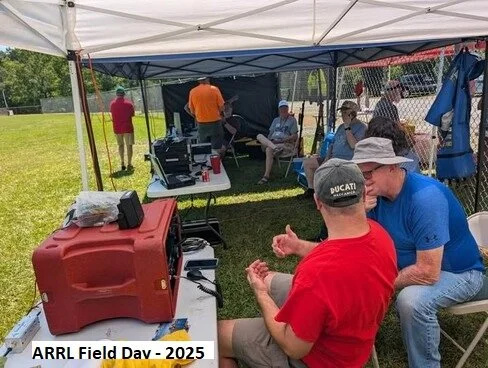
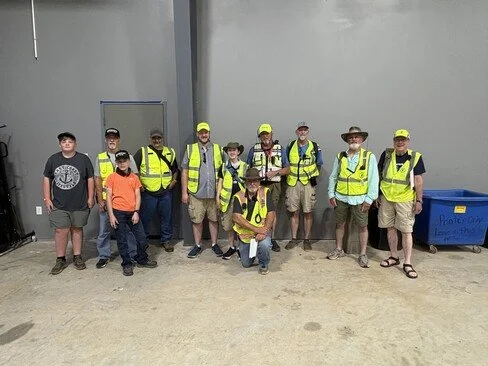
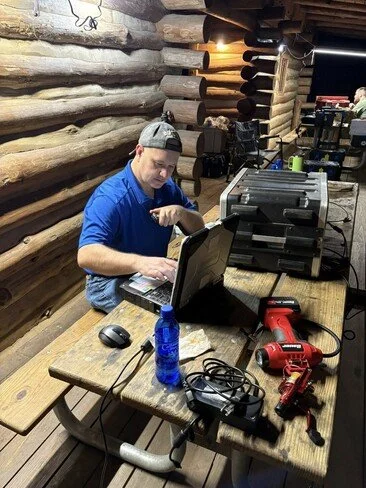
ARRL Summer Field Day was a blast. A special shout out to Colin (KO4IZK) for coordinating this year’s activity and Claude (AC4SH) for all the work he does a club president. Chris (N5TOY) smoked some BBQ for lunch and Kevin (KR4BDR) cooked hamburgers and hot dogs for dinner. Many others provided equipment and helped set up and take down the station. A big thank you to everyone that came out and made this year a success. I have included some of the pictures here but there are more pictures of the event available in our photo album.
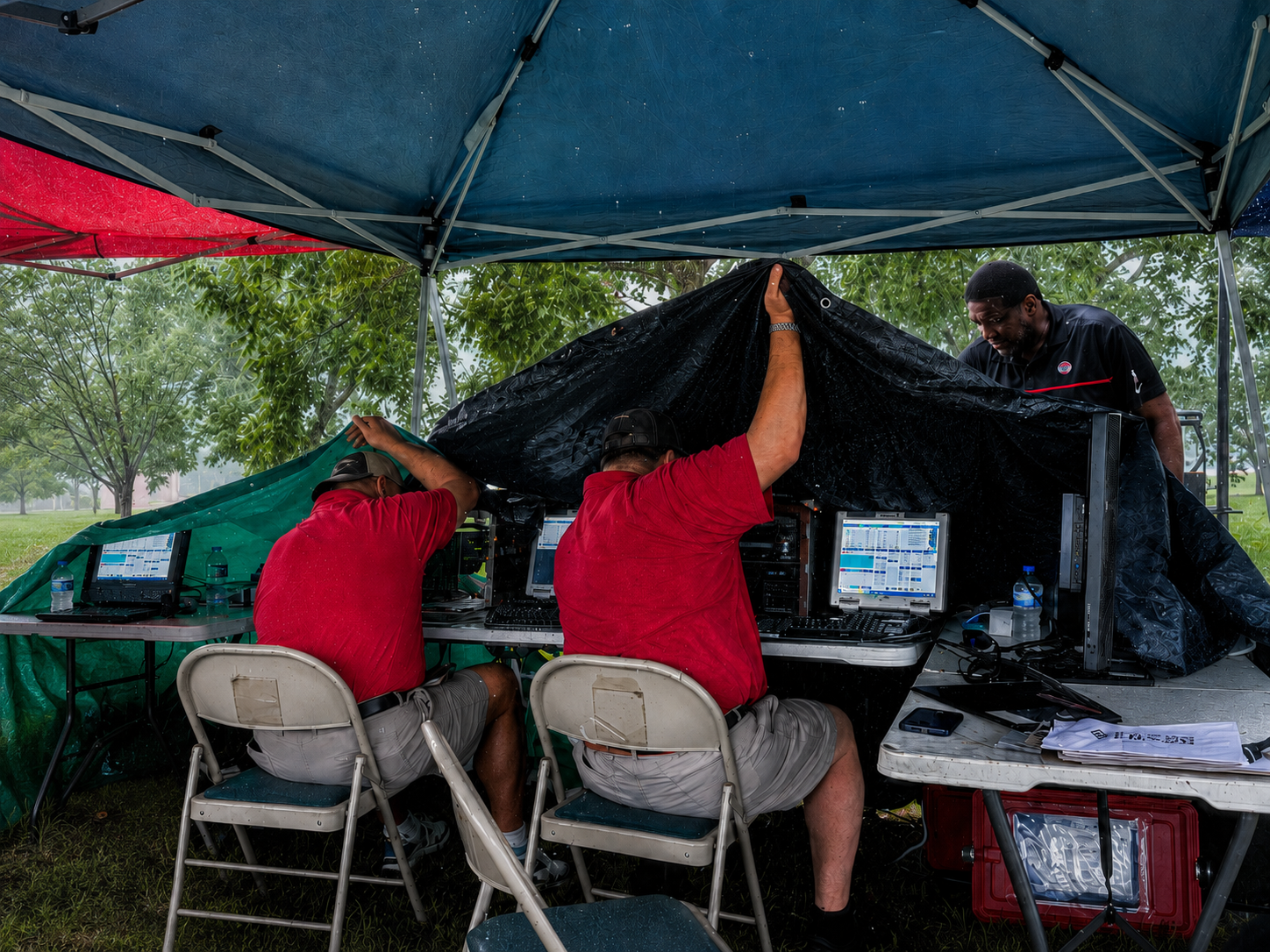
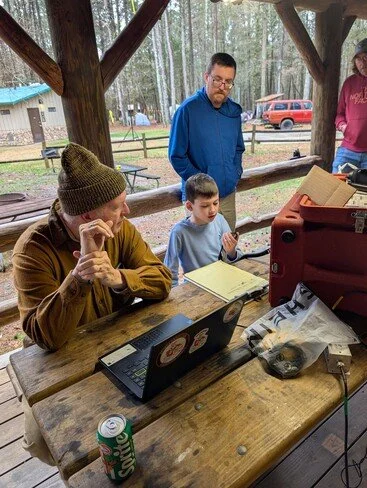
Kevin (KR4BDR) and Andy (KQ4VVW) work radios in the rain with Rob (N2WGK) helping.
Tom Foley (VK1CAT) was visiting from Franklin, Australia and decided to spend Field Day with our club. We enjoyed spending time with Tom.
Carolyn, daughter of Daniel (KR4LOE), made 4 contacts on the GOTA station under the superb tutelage of Kevin (KR4BDR).
Solar panels provide power near the Field Day operating tents and radio equipment.
2026 Membership Drive
ARC reached our goal of 100 members.
Don’t stop now. Let’s keep growing.! Join the Athens Radio Club.
El Nino
Have you heard about the “Super El Nino” this year? Read about the El Nino on the ARC Weather page.
VIP Visit
Read about the recent VIP Visit to the Athens Airport on the ARC Specials page.
GA WildFires
Read about the recent WildFires in South GA on the ARC Specials page.
Keeping HamClock Alive
HamClock was created by Elwood Downey, WB0OEW — an engineer who built one of the most popular shack displays in amateur radio and gave it away for free. Elwood became a Silent Key on January 29, 2026. Because of this, the server that supports the original HamClock will be going offline in June 2026.
However, Bruce Edrich, W4BAE, has built a back-end server that promises to keep your HamClock installation functioning after that time. Bruce is a cybersecurity consultant and ham radio operator based in South Florida. He is hosting the new web site hamclock.com. Visit hamclock.com to get the details on how to keep your HamClock operating.
OpenHamClock
Have you been looking at Geocron or Hamclock but haven’t pulled the trigger yet? Try OpenHamClock. You can find a link to it on our Links page in the Maps and Display Software section.
Suggestion Box
Please take a moment and tell us what you think of Athens Radio Club. You can also suggest ideas or monthly programs. Just use the message to send us your ideas or comments.
We also receive physical mail at:
Athens Radio Club
PO Box 251
Hull, GA 30646
Donations
Please consider making a donation to our group to fund things such as Supporting Special Events, Repeater Maintenance, Disaster Aid, General Operations, and Public Service.
We seek to educate members and others interested in Amateur Radio, as well as provide information about amateur radio activities in Athens and surrounding areas.
Maybe your neighbor is a licensed ‘ham’ radio operator? Take a LOOK!
For current meeting information visit the meetings page.
If you have suggestions for improving this site, please email the Webmaster.
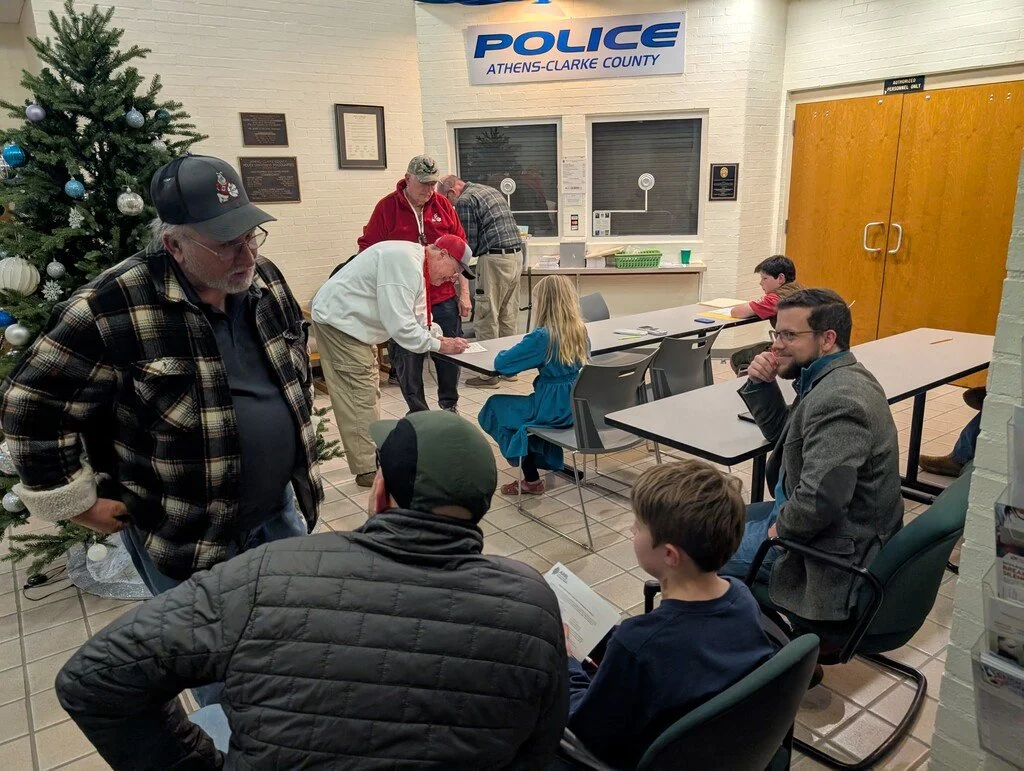
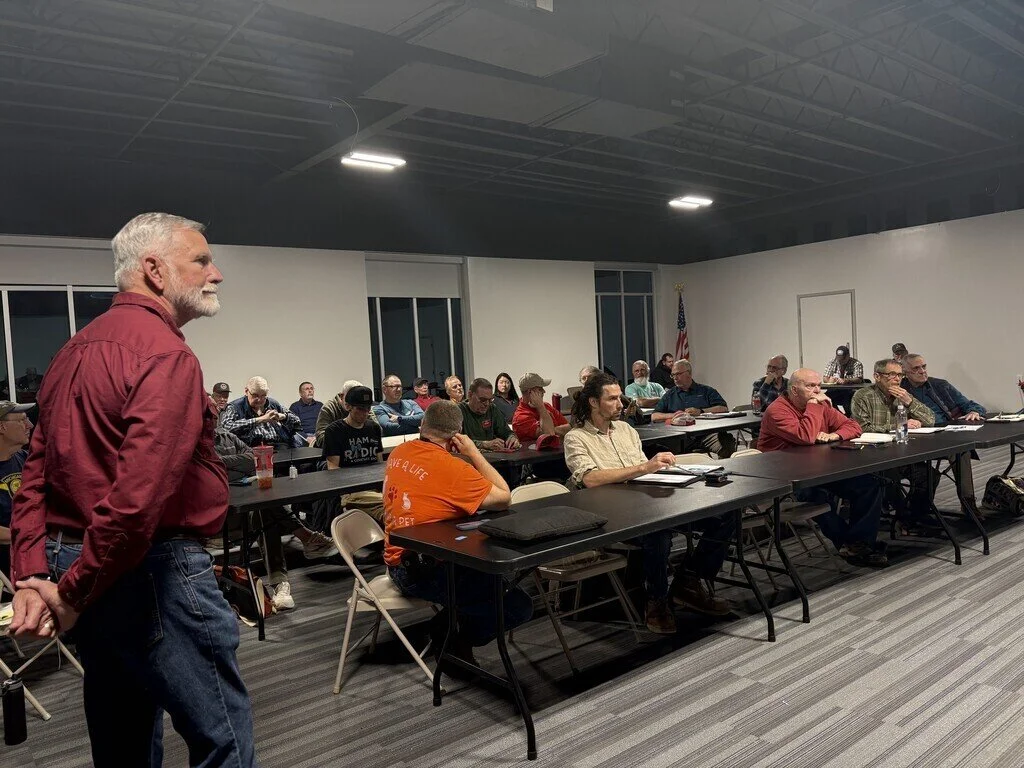
Athens Radio Club meetings are held at 7:30 pm on the first Tuesday of every month, except July and December. Check the Meeting Location page for the correct location.